
KEEPCARING symposium on healthcare workers’ well-being at the 17th EAOHP Conference
The KEEPCARING project was presented at the 17th EAOHP Conference, which took place in Helsinki, Finland, from 15 to 17 June 2026, through a dedicated symposium titled “KEEPCARING: Understanding and Improving Healthcare Professionals’ Well-Being”.
The symposium was held on Wednesday, 17 June 2026, and was chaired by Luisa Solms, Erasmus University Rotterdam. It brought together researchers and practitioners from the international Horizon Europe KEEPCARING consortium to share emerging project insights with the occupational health psychology community and contribute to the wider discussion on how to build healthier, more supportive and more resilient healthcare workplaces across Europe.
The session focused on the well-being of healthcare professionals, who continue to face extraordinary demands, with stress and burnout affecting their health, working lives, workforce retention, organisational functioning, and the quality and safety of patient care.
The symposium brought together several KEEPCARING studies exploring the causes, experiences, and possible responses to burnout and stress among healthcare professionals. Following Luisa Solms’ opening, Andero Uusberg introduced a conceptual framework linking burnout to the repeated failure to meet important needs, such as autonomy, competence, and relatedness, which are often challenged in healthcare settings. Trina Tamrakar then presented qualitative findings from interviews with healthcare professionals across Europe, showing that burnout was widely reported, with staff in Ireland appearing particularly affected. Her analysis highlighted the importance of social support from colleagues and leaders, while also pointing to differences in structural support across countries, from weaker support in Ireland to stronger protections in Denmark.
The following presentations focused on interventions, team dynamics, and practical tools for supporting wellbeing. Sophie Vermeulen shared findings from a literature review and meta-analysis showing that resilience-focused interventions remain limited, while yoga appeared particularly effective in reducing exhaustion. Luisa Solms presented research on prosocial behaviour and job crafting, showing that helping behaviours can benefit individuals but may not always support the wider team when they do not match actual needs. Johanne Søborg Hartmann then discussed ongoing research on video-based debriefings in operating rooms using the Black Box, highlighting both their potential value and the influence of hierarchy on team discussions. Closing the symposium, Lara Solms emphasized that sustainable wellbeing interventions must go beyond individual-level support and also address systemic pressures such as understaffing, overwork, perfectionism, and stigma around seeking help.
KEEPCARING presented at the UEMS Congress in Leuven
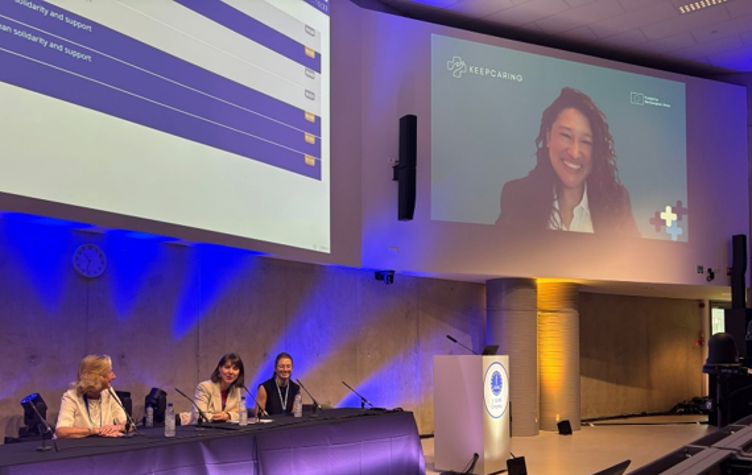
The KEEPCARING project and preliminary findings were presented at the UEMS Congress, held in Leuven, Belgium, from 27 to 30 May 2026. The project was highlighted among sessions dedicated to supporting doctors and healthcare professionals in an increasingly demanding healthcare environment.
Across 60 interactive sessions, the Congress addressed key challenges affecting the European medical workforce, including workforce shortages, fatigue, occupational risks, mental wellbeing, patient safety, and the need to prepare healthcare professionals for future health system pressures.
KEEPCARING was featured in the session “Advancing support to doctors’ and nurses’ mental health and wellbeing: the KEEPCARING project”, which took place on Saturday, 30 May. The programme includes contributions from Trina Tamrakar, University of Limerick, Sophie Vermeulen, Amsterdam UMC and a presentation of the Change Management Platform by DigitalTwin Technology.
The session provided an opportunity to present how KEEPCARING is working to better understand, protect and strengthen the wellbeing and resilience of healthcare professionals, especially in hospital settings. Participants expressed strong interest in the tools, methodologies, and digital solutions being developed within the project to support healthcare workers and promote healthier working environments.
The wider Congress discussions also highlighted the importance of preparedness in medicine, from supporting patients in the face of health misinformation and use of AI to protecting the mental wellbeing of healthcare professionals and training future generations of doctors to respond to complex risks, including pandemics, climate change, cyber threats, terrorism and war.
Through its participation in the UEMS Congress, KEEPCARING contributed to the exchange on how European healthcare systems can better support doctors, nurses and other healthcare professionals, while promoting safer, more resilient and more sustainable working environments.
KEEPCARING presented at the 12th EORNA Congress
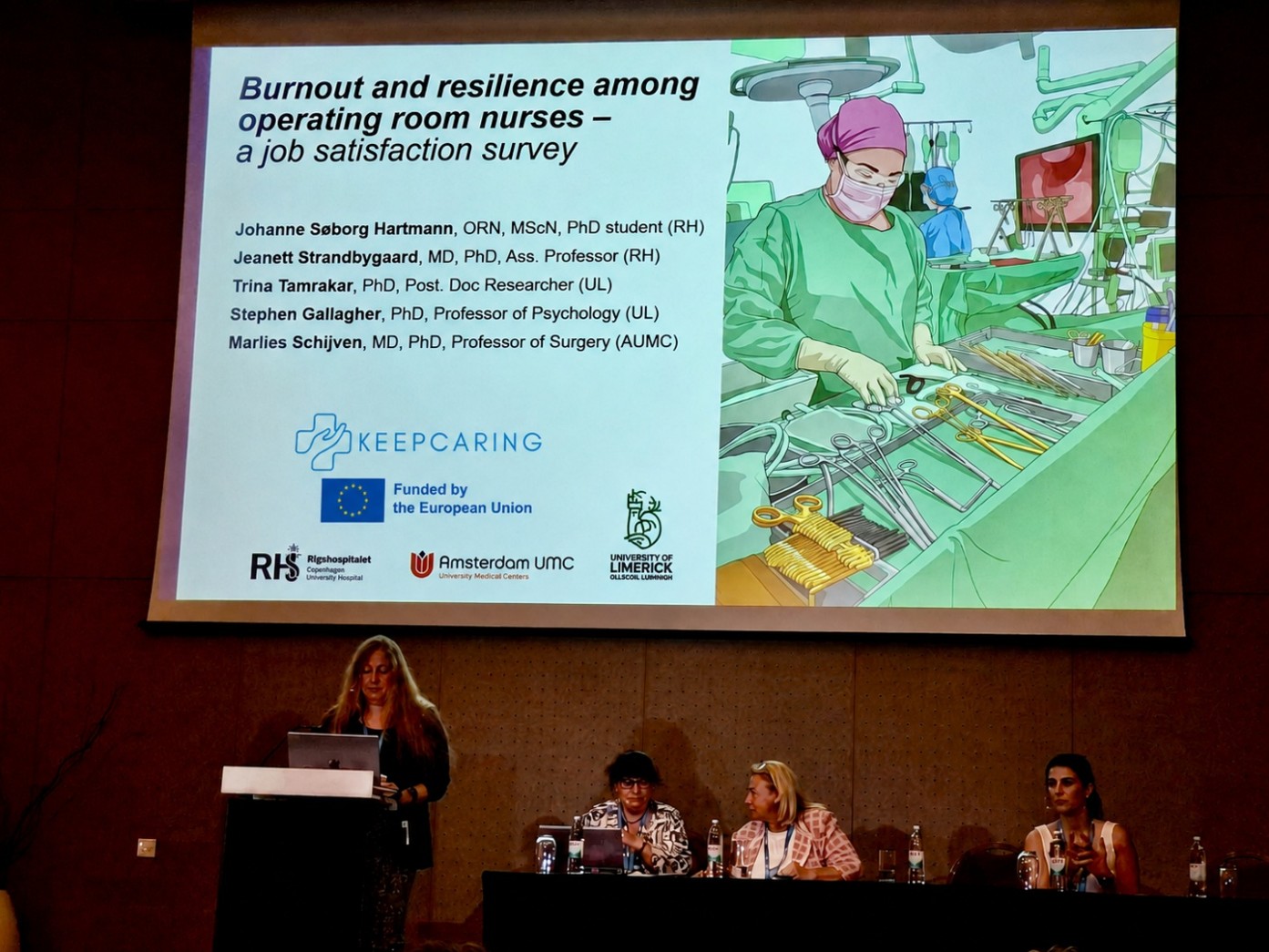
The KEEPCARING project was presented at the 12th EORNA Congress, organised by the European Perioperative Nurses Association, which took place from 14 to 16 May 2026 at the Hotel Sheraton Dubrovnik Riviera, in Croatia.
The Congress, dedicated to the theme “The Synergy of Expertise and Knowledge”, brought together the international perioperative nursing community to exchange on the latest evidence, professional practices, innovations and technologies supporting perioperative care. The programme focused on strengthening professional development, improving patient care and surgical outcomes, promoting sustainability, and fostering collaboration across Europe.
Within this context, Johanne Søborg Hartmann, from Copenhagen University Hospital Rigshospitalet and the KEEPCARING project, presented the study “Burnout and resilience among operating room nurses – a job satisfaction survey”.
The presentation focused on the demanding nature of the operating room as a working environment and on the occupational stress experienced by operating room nurses. The study, carried out within KEEPCARING, investigates burnout symptoms, job satisfaction, leadership influence, and individual, team and organisational stressors affecting operating room nurses’ work life.
152 operating room nurses participated in the survey. The results presented at the Congress highlighted existing challenges in the operating room environment, including burnout symptoms, pressure on work-life balance, and the stressful nature of daily work in surgical settings. The results was followed up by a presentation of the intervention of team debriefing after surgery as a tool for more psychological safety and greater work environment within the operating room.
The study contributes to KEEPCARING’s broader objective of enhancing wellbeing and resilience among healthcare professionals in EU hospital settings. Future work in the project will build on these insights to support healthier healthcare workplaces through co-created non-digital, digital and AI-driven approaches addressing individual, team and organisational stressors.
KEEPCARING presented at the PHM 2026 Conference in Dublin
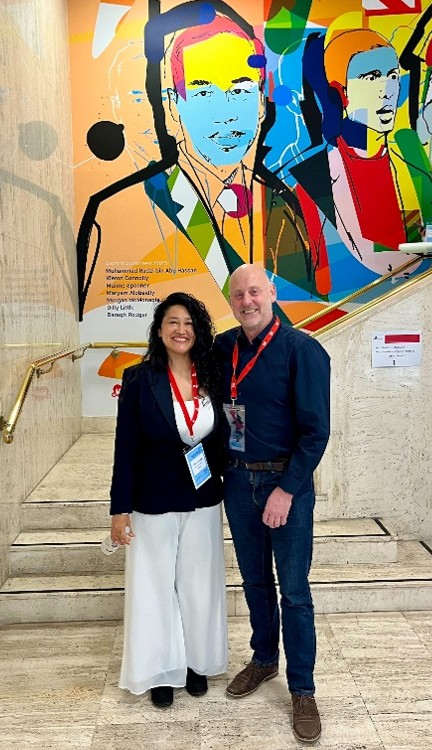
On 24th April 2026, KEEPCARING was presented at the Psychology, Health and Medicine (PHM) 2026 Conference, hosted by the Royal College of Surgeons in Ireland (RCSI), RCSI University of Medicine and Health Sciences, in Dublin.
Trina Tamrakar, PhD, together with co-author Professor Stephen Gallagher, University of Limerick, presented preliminary findings from research carried out as part of the KEEPCARING EU Horizon project.
The poster presentation focused on stressors, burnout and intention to quit among healthcare professionals across several European countries, including Ireland, Germany, Denmark and the Netherlands. The findings highlighted both common and country-specific factors contributing to stress and burnout among doctors and nurses. Supportive colleagues and supervisors emerged as important protective factors, while being overworked, understaffed and a lack of awareness of workload by management were identified as common risk factors. The preliminary results also suggested that Irish hospital-based healthcare professionals reported higher levels of burnout and greater intention to quit compared to some of their European counterparts.
The participation in the PHM 2026 Conference represented an important opportunity to share early KEEPCARING insights with the scientific community and to contribute to the wider discussion on healthcare workforce wellbeing, burnout prevention and retention in Europe.